
Challenging School Bus Camera Tickets With Effective Defense Strategies
Oct. 31, 2026
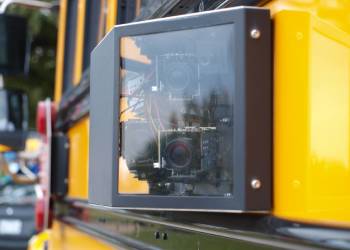 A notice in the mail, a few frames of your car beside a stopped Buffalo school bus, and a $250 balance due: the paperwork makes payment look like the only option, but you have the right to contest a school bus camera ticket. You can challenge the notice by reviewing the recorded footage, identifying errors in the evidence, and presenting any applicable defenses.
In New York, these tickets impose civil penalties on vehicle owners, not driving convictions, so they stay off your driving record and cannot be used for auto insurance purposes.
As a traffic defense lawyer at Michael Kuzma Attorney at Law, I review these notices for drivers and help them decide whether a challenge is worth pursuing. A free consultation before your notice deadline lets you make that decision with the evidence in front of you.
How Buffalo’s School Bus Camera Program Works
Under New York Vehicle and Traffic Law section 1174, you must stop when approaching or overtaking a stopped school bus displaying flashing red lights. This rule applies to traffic traveling in either direction, including on divided highways. You may proceed when the bus moves again, or its driver or a police officer signals you to continue.
Buffalo began issuing camera tickets on October 1, 2024, after a public awareness period. Cameras installed on Buffalo Public Schools buses record suspected violations, and the city reviews the evidence before issuing a notice of liability to the vehicle's registered owner.
You can contest the notice if you believe the footage does not establish a violation or you have another legally recognized defense. Your challenge should focus on the circumstances of the alleged violation and the evidence supporting the ticket.
What a Camera Ticket Can and Cannot Cost You
Under New York’s school bus camera law, the owner's penalty is $250 for a first violation, $275 for a second within 18 months, and $300 for a third or later violation within 18 months. Local law may impose an additional penalty of up to $25 if you fail to respond on time.
A camera ticket does not result in a criminal conviction, driver's license points, or an entry on your driving record. It also cannot be used for motor vehicle insurance purposes.
Those protections apply only to the camera notice. If a police officer issues you a ticket for illegally passing a stopped school bus, a first conviction can result in a $250 to $400 fine, up to 30 days in jail, or both, and eight points on your license. Repeat convictions within three years carry higher penalties.
Possible Defenses
Several defenses come directly from the statutes, and each depends on proof you can often gather yourself. When I handle school bus camera ticket defense, I start by checking whether any of these fit the facts:
Signaled to proceed: Section 1174 lets a driver go when the bus driver or a police officer signals, so footage showing a wave-through carries real weight.
Stop-arm malfunction: Evidence that the required red lights or stop-arm were not operating as alleged may undermine the violation. A malfunction does not automatically invalidate a ticket.
Stolen vehicle: If the car was reported stolen before the violation and had not been recovered, mailing a certified copy of the police report to the hearing body is enough to raise this defense.
Leased or rented vehicle: A rental or leasing company may transfer liability to the lessee by submitting the required information within the applicable 37-day period.
Driver already convicted: An owner is not liable under the camera program when the operator has been convicted of the underlying violation.
Being the owner but not the driver is not, by itself, a defense. If you allowed someone else to drive your vehicle, you are responsible for the penalty, although the law permits you to seek reimbursement from that driver.
Where Camera Evidence Can Fall Short
The city's case relies on recorded images and a technician's sworn or affirmed certificate, which serves as initial evidence supporting the alleged violation. State law establishes what these records must show. The images must identify your vehicle and license plate, at least one activated stop-arm, and an electronic indicator showing that the bus's red lights were flashing.
The certificate must identify the camera system, confirm the bus's required inspection status, and provide its registration number. The notice must also identify where and when the alleged violation occurred, along with the required vehicle and camera information. Missing or inconsistent details may provide grounds to question the evidence.
When the required images and certification are present, the law presumes the bus was stopped to receive or discharge passengers, or because another school bus ahead had stopped for that purpose. You can challenge that presumption with contrary evidence.
Another potential dispute involves when the red lights activated relative to your vehicle's position. Reviewing the full video, rather than relying only on still images, may reveal whether the footage actually establishes a violation. However, claiming that you had insufficient time to stop does not automatically defeat the ticket.
What to Do Before Your Response Deadline
Your notice explains how and when to contest it. Failing to respond within the prescribed period is treated as an admission of liability and may result in a default judgment. Before paying or requesting a hearing, consider these steps:
Read the notice and identify the deadline and instructions for contesting liability.
Review the complete available footage, including when the red lights and stop-arm activated.
Check the notice for errors involving the date, location, vehicle information, or camera identification.
Preserve relevant evidence, including dashcam recordings, photographs, witness information, or a police report.
Submit your challenge through the procedure stated in the notice and retain copies of your documents.
If you are uncertain whether the evidence supports a defense, I can review your notice and explain what arguments may be available before you decide how to respond.
Strategic Traffic Law Defense in New York
I have practiced law since 1998 and have long advocated for government transparency, including through extensive Freedom of Information Act work. That background shapes how I approach camera tickets. The municipality must prove its case with records that meet state requirements, and I examine those records rather than accepting them at face value.
When you hire me, you work directly with me. I can review the camera footage, identify possible defenses, and represent you in challenging the alleged violation.
I represent drivers ticketed in New York State. If you need a traffic defense attorney in Buffalo, New York, contact Michael Kuzma Attorney at Law to schedule a free consultation. Bring your notice and its deadline, and we can decide together whether challenging your school bus camera ticket makes sense.